Waste management throughout the crop cycle has become an increasingly important issue in intensive horticulture. Regulatory pressure and the requirements of composting facilities are accelerating the search for alternatives to conventional plastic that can help reduce waste without compromising crop efficiency or making end-of-season removal more difficult.
At the end of each crop cycle, growers must manage not only plant residues but also the various components used for months to guide and support the plants. Clips, twine and other elements are part of a system that needs to work efficiently throughout the growing cycle, while also influencing the amount of work required to prepare the greenhouse for the next crop.
The challenge, therefore, is not simply to replace one material with another. It is about finding solutions that can maintain their functionality throughout the entire season while also making waste management easier afterwards, without changing growers’ usual working practices.
To address this need, ARaymond Agriculture has been developing a new generation of biodegradable and compostable BIO clips and supports for several years. These solutions are designed to deliver the same performance as conventional alternatives while helping to make waste management more efficient at the end of the crop cycle.
BIO solutions designed to meet crop requirements
The elements used to guide and support plants need to perform reliably under demanding conditions throughout the entire crop cycle: supporting plant growth, ensuring proper fastening and withstanding the loads associated with each crop.
For this reason, ARaymond Agriculture BIO solutions are designed to maintain their strength and functionality throughout the entire crop cycle, ensuring that switching to a BIO alternative does not require growers to change their usual greenhouse practices.
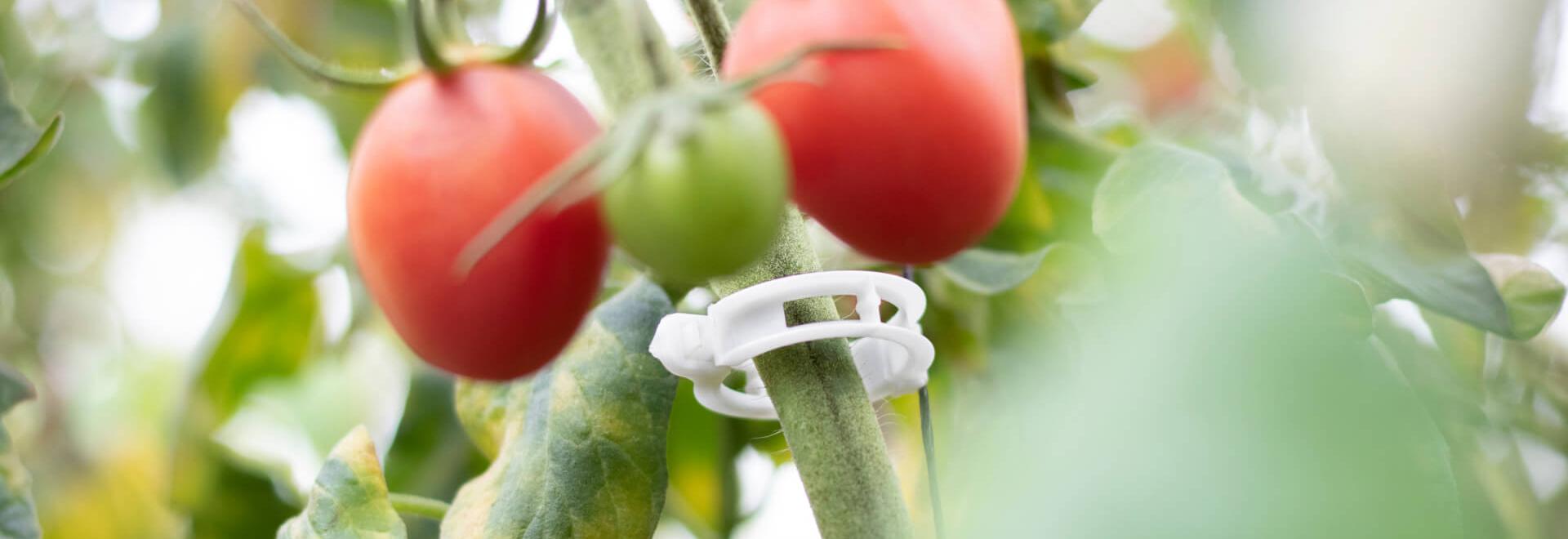
The range includes specific clips for tomatoes, cucumbers and peppers, such as the Easy Clip 14 mm BIO, Classic Clip 21S BIO and Easy Clip 26 mm BIO, as well as support solutions such as FlexTruss BIO and TwinHook BIO.
These products are part of ARaymond Agriculture’s range of greenhouse solutions, developed to meet the fastening and plant-guiding needs of different crops.
The variety of solutions makes it possible to address different fastening and guiding requirements while focusing on key aspects of growers’ day-to-day work:
- Quick and easy installation.
- Secure closure and reliable twine retention.
- Rounded design to help reduce potential damage to the plant.
- Adaptation to plant growth and crop load.
- Easier waste management at the end of the season.
- EN 13432 certification for management in industrial composting facilities.
In this way, sustainability becomes a practical part of crop management: throughout the season, the solutions meet the plant’s functional requirements, while at the end of the crop cycle, their compostable properties help simplify the management of the materials used.
Performance validated under real growing conditions in Almería
At ARaymond Agriculture, we know that the biodegradable and compostable nature of a material cannot come at the expense of its primary function. Clips need to keep both the plant and the twine securely in place and perform reliably when exposed to factors such as temperature, humidity and crop weight throughout the growing cycle.
For this reason, the BIO solutions were tested under demanding real-life growing conditions in trials led by Novamont together with Bayer to test its Mater-Bi material at Bayer’s experimental fields in El Ejido, Almería.
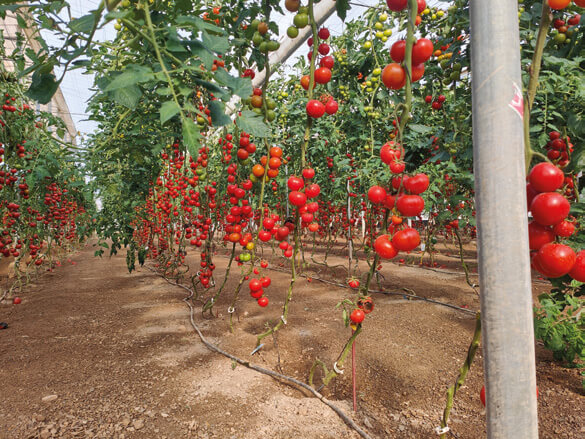
Over the course of one year, 180,000 clips were used across more than 80 hectares of tomato, cucumber, pepper and melon crops. The solutions were exposed to temperatures of up to 40 °C, humidity levels of up to 90% and loads of up to 20 kg per plant.
These conditions made it possible to assess the performance of the solutions over a complete crop cycle and across different types of crops.
The trials confirmed their strength, flexibility and ease of use throughout the entire crop cycle. The test also included 1.3 million metres of compostable twine used across more than 80 hectares.
From the greenhouse to the composting facility
The performance of these solutions once the crop cycle has ended is a fundamental part of their value proposition.
At the end of the season, the clips and twine could be managed together with the plant residues at the SACH Las Chozas composting facility in El Ejido, where both the twine and the clips showed excellent compostability results.
Being able to manage these materials together helps simplify one of the most labour-intensive stages in the greenhouse: crop removal. In this way, the components used for plant guiding and support do not need to be treated as completely separate waste streams from the plant residues.
This helps streamline the management of the materials used throughout the crop cycle and allows growers to move more efficiently into end-of-season tasks and prepare the greenhouse for the next crop.
The EN 13432 certification also provides a recognised framework for managing these solutions in industrial composting facilities. ARaymond Agriculture BIO products certified to this standard are designed to biodegrade under industrial composting conditions. You can find more information about the company’s BIO solutions and certifications on the dedicated range page.
This BIO approach therefore considers not only how the product performs while in use, but also what happens to it once it has fulfilled its function.
Reducing waste while maintaining crop performance
The transition towards alternatives to conventional plastic requires more efficient waste management solutions that are fully compatible with growers’ real operational needs.
Trials carried out with ARaymond Agriculture BIO solutions show that it is possible to reduce the use of conventional plastic and simplify waste management at the end of the season without compromising greenhouse performance or day-to-day operations.
The aim is to enable growers to adopt biodegradable and compostable solutions while maintaining their usual working practices throughout the crop cycle, and at the same time making it easier to remove and manage the materials once the season is over.
A solution designed to combine performance, ease of use and simpler end-of-season waste management, while meeting the real needs of intensive horticulture.